
About
The Islam West Africa Collection (IWAC) is an open-access digital database documenting Islam and Muslim communities in West Africa from the 1960s to the present. With over 14,500 newspaper articles, archival documents, Islamic publications, photographs, audio and video recordings, and bibliographic references from six countries—Benin, Burkina Faso, Côte d'Ivoire, Niger, Nigeria, and Togo—IWAC offers researchers worldwide unprecedented access to primary sources on contemporary West African Islam.
All materials are freely available under a Creative Commons license. Documents can be downloaded in their original formats, and metadata can be exported in structured formats (CSV, JSON) for integration into quantitative analyses, network visualisations, or machine learning pipelines.
From fieldwork to open access
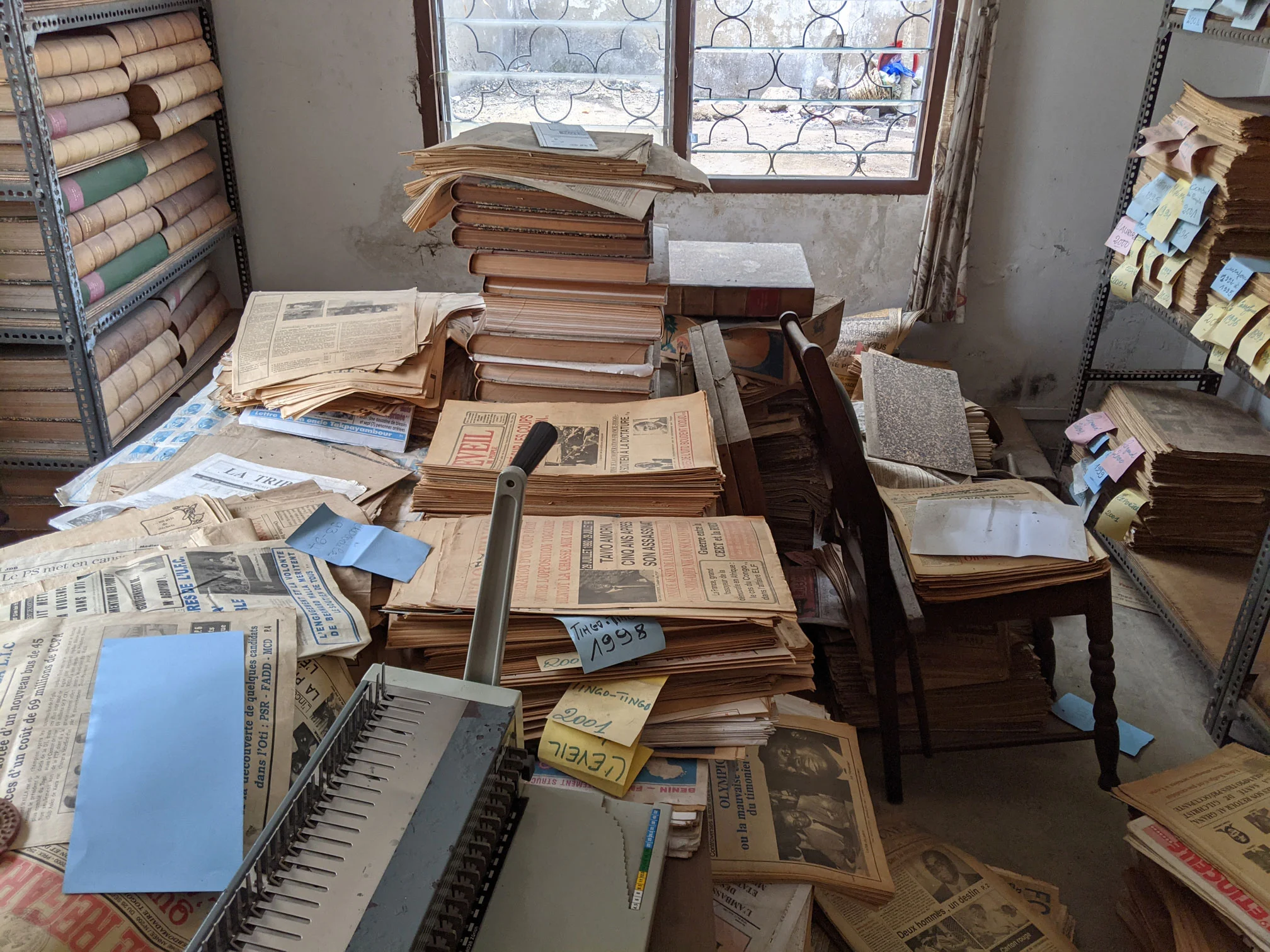
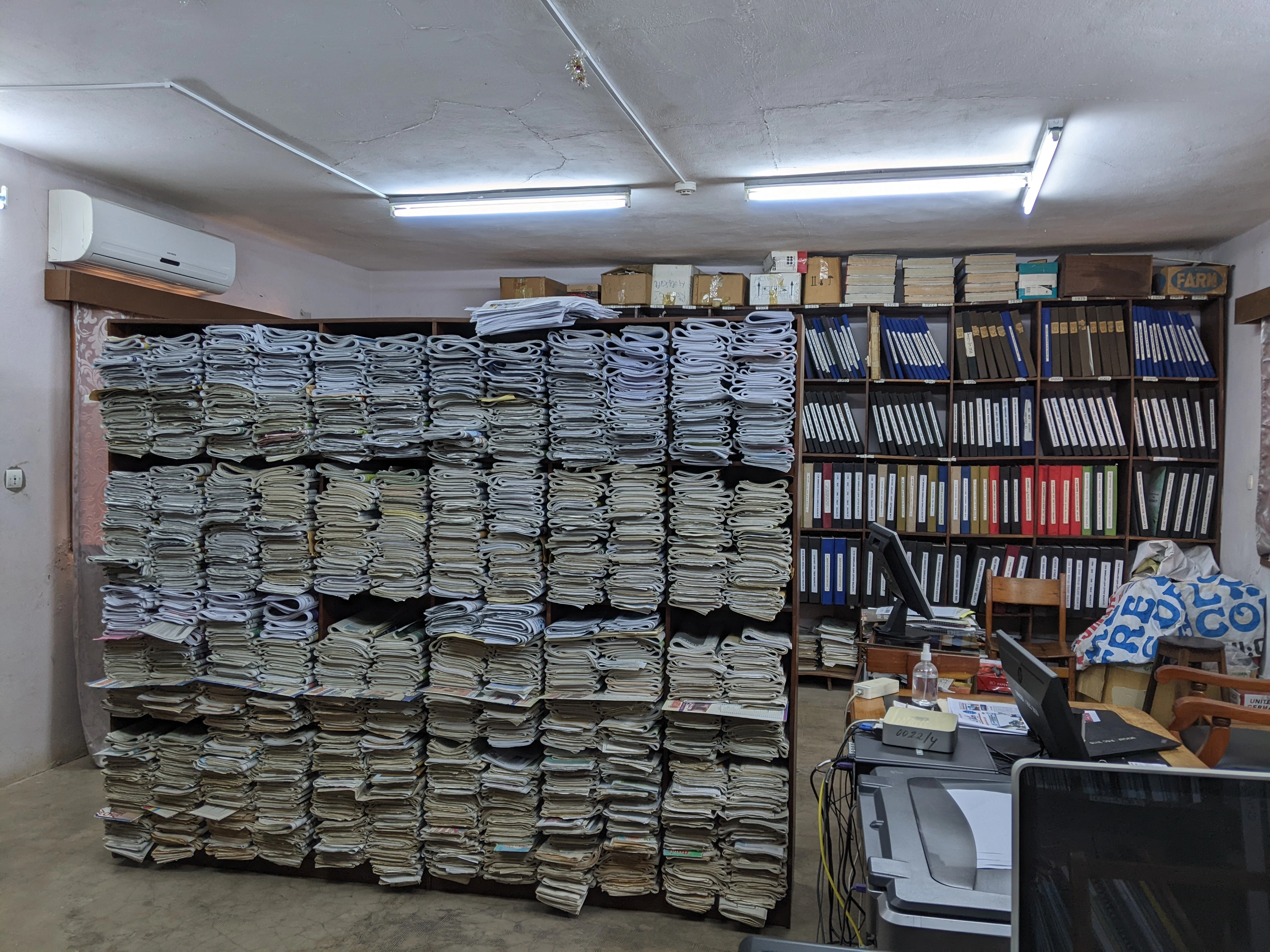
IWAC did not emerge from a formal digitisation plan. It grew from the practical demands of historical fieldwork.
Since 2011, Frédérick Madore has conducted extensive fieldwork and archival research across francophone West Africa, focusing on Islamic activism among youth and women in Burkina Faso and Côte d'Ivoire, Muslim minorities in southern Benin and Togo, and the history of faith-based student organisations at the Université d'Abomey-Calavi (Benin) and the Université de Lomé (Togo). Beginning with his Master's research, he encountered a rapidly expanding, geographically scattered body of materials across West African archives and libraries. In contrast to colonial repositories, many postcolonial African state archives operate with extremely limited resources and are frequently fragmentary. Scarcity, restricted access, and the disappearance of entire collections are common; materials may be dispersed across several centres and lack effective cataloguing. Faced with these challenges, Madore began digitising and organising sources himself—and the workflow quickly outgrew its original scope. What started as a personal research tool evolved into something far more ambitious.
Over the following decade, Madore digitised or saved more than 24,000 pages of press clippings from over 80 newspapers dating back to 1962; some 1,500 issues from 25 Islamic publications (many now defunct); and thousands of online articles preserved through the Wayback Machine. Because digital content in sub-Saharan Africa is particularly transient—platforms regularly disappear and URLs break—web archiving makes it possible to access historical pages that would otherwise be lost forever. These materials came from nine archival institutions across six countries and numerous private collections belonging to individuals and Islamic associations. These sources provide an excellent means of tracing the history of Muslim communities.
Initially maintained in a private Zotero database, this accumulation could fairly be called "digital hoarding"—a personal archive whose size exceeded any one person's ability to fully analyse. As colleagues working on Islam in the region began requesting specific clippings, the limits of a private archive became clear. The decision to build a public database was shaped by the principles of open science and a commitment to making research data findable, accessible, interoperable, and reusable.
Project development
The transition from private collection to public resource unfolded in stages:
2018–2020: With support from a Banting Postdoctoral Fellowship and in collaboration with the University of Florida Libraries and the Sahel Research Group, Madore created the Islam Burkina Faso Collection—an open-access database of over 3,000 documents. For more on this initial project, see Frédérick Madore, "La Collection Islam Burkina Faso: promesses et défis des humanités numériques", Revue d'Histoire Contemporaine de l'Afrique (2021).
2023: With backing from the Leibniz-Zentrum Moderner Orient (ZMO) and the Berlin Senate, the project expanded into the Islam West Africa Collection. Through collaboration with Abdoulaye Sounaye (ZMO), coverage extended to Niger and Nigeria. IWAC was officially launched on 9 November 2023 at Media in Cooperation and Transition (MiCT) in Berlin, with over 5,000 items. The collection has since grown to more than 14,500 documents.
Ongoing: The collection continues to grow. The full dataset is also hosted on Hugging Face, providing stable infrastructure for long-term preservation, version control, and seamless integration with AI and machine learning workflows.
Linked Open Data (LOD) and Semantic Web
IWAC follows the principles of Linked Open Data (LOD) for publishing structured, interoperable, machine-readable data on the semantic web.
Wikidata Q identifiers serve as URIs (Uniform Resource Identifiers) for named entities—people, organisations, locations, events, and topics—wherever possible. This approach disambiguates entities with the same name and consolidates pseudonyms and name variants for single entities.
To express hierarchical and relational connections between entities, IWAC uses the Dublin Core metadata elements "Is Part Of", "Relation", "Replaces", and "Is Replaced By". See for example the entity Communauté Musulmane du Burkina Faso.
Project director

Frédérick Madore is Data Curator at the Cluster of Excellence "Africa Multiple", University of Bayreuth (Germany), and was previously a Research Fellow at ZMO. His research sits at the intersection of Islamic studies, digital humanities, and artificial intelligence, exploring how computational methods can transform the way we access, analyse, and interpret historical archives. He is the author of Religious Activism on Campuses in Togo and Benin (De Gruyter, 2025) and La construction d'une sphère publique musulmane en Afrique de l'Ouest (Presses de l'Université Laval / Éditions Hermann, 2016). He holds a Ph.D. in History from Université Laval and previously held a Banting Postdoctoral Fellowship at the University of Florida.
Research assistants
The work of research assistants is identified by the Dublin Core term "Contributor", indicating the person(s) responsible for publishing the resource online and identifying it.
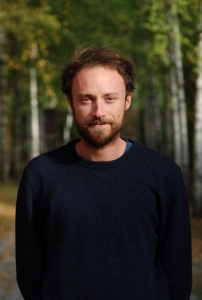
Vincent Favier (2023)
Vincent Favier processed over 1,000 bibliographical references on Islam in Niger and Nigeria. The references, which include a wide variety of scholarly works, have been edited and standardised to optimise access and use. Wherever possible, abstracts, keywords, and PDFs have been added or updated. He also encoded and organised a large collection of Islamic sermons by Sheikh Albani Zaria, a prominent Nigerian Salafi scholar, and worked on adding metadata to collections of Beninese newspapers (Daho-Express, Ehuzu, and La Nation). See all his contributions.

Aleksei Akseshin (2023)
Aleksei Akseshin worked on the collection of Islamic sermons by Sheikh Albani Zaria in Hausa. He wrote short summaries, added detailed metadata, and inserted timestamps to mark important sections of the video recordings. See all his contributions.

Andrée-Ann Brassard (2023)
Andrée-Ann Brassard worked on the Fraternité Matin collection. See all her contributions.
Collaborators
Documents from other researchers' collections are identified by the Dublin Core term "Source".


Funding
2023
In 2023, ZMO received funding from the Berlin Senate Department for Science, Health and Care (Senatsverwaltung für Wissenschaft, Gesundheit und Pflege) to improve ZMO's digital research infrastructure. Part of the grant was awarded to Frédérick Madore for the development of the Islam West Africa Collection.

2018-20
The Islam Burkina Faso Collection was supported by the Banting Postdoctoral Fellowships Program of Canada, of which Frédérick Madore was a fellow.
Acknowledgments
This website would not have been possible without the help and support of several people. In particular, the project director would like to thank:
- Ulrike Freitag and Sonja Hegasy of the ZMO for their support;
- Dodji Amouzouvi (Université d'Abomey-Calavi);
- Michael Schutz for his technical assistance;
- Alisher Karabaev for his knowledge of open science and his help with ZMO's Institutional Repository;
- Yael Netzer for her training on Omeka S, the semantic web and linked open data;
- Aïssétou Sawadogo, Lassane Ouedraogo, Fiacre Anato, Farid Bah-Traoré, Koudbi Kaboré, Paul Amoussou and Samba Koné, who helped secure copyright permissions from various newspaper editors and Islamic associations;
- Tim Fedke for designing the website banner;
- Perry Collins for her invaluable help with the previous Islam Burkina Faso Collection;
- Leonardo A. Villalón, Daniel Reboussin and Tiffany Esteban for their contributions to earlier discussions on the project.