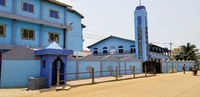
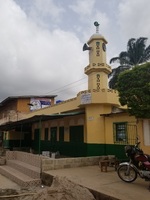
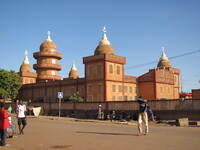
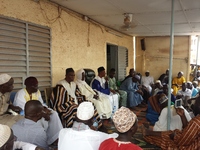
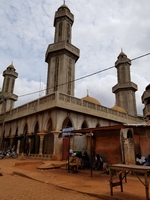
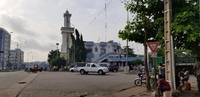
Burkina Faso is an exception in the Sahel in that no politicisation and ideological radicalisation of Islam has taken shape in the public space. This paper – the first version of a chapter in an upcoming book – analyses both the causes and the implications of this fact. The historical analysis of the formative process of the Burkinabe nation reveals that Islamisation is a recent development in the country as compared to other parts of the Sahel. It came about as a result of the colonial transformation of societies in the area of future Burkina Faso, in the first half of the twentieth century and progressed in competition with Catholicism. While Islam later became the country's majority religion, the singular aspects of Burkina Faso's history – again, relative to its neighbours – have created a society marked by religious pluralism, and a very specific form of ‘consensual secularism.' In this context, an Islamic public space has emerged where various doctrinal currents – modernist reformists, Wahhabis, Sufis – struggle to assert themselves, but which leads to an enduring combination of subordination to and partnership with Burkina's successive regimes, especially as influential Muslim merchants largely control the all-important trade economy of the country. This result does not imply that Muslims in Burkina are politically quiescent, but that they tend to mobilise politically not as Muslims, but as citizens of Burkina, as is testified by the country's stormy political history. The case therefore teaches us to avoid essentialising Muslims' existence in the political arena.
Benin has a distinctive Islamic school system, constantly evolving since the colonial period: Besides the Coranic schools, which are still the basic instance of religious socialization, écoles arabes were established since independence, and furthermore there is an increase in écoles franco-arabes since the past ten years. This type of school combines religious and secular education. In the process of change in the educational system teachers are considered to be the key actors and initiators. This paper traces the development of the Islamic educational system by using the example of the city of Djougou in northern Benin. It aims to analyze the motivations of teachers in this arena and explores to what extent their self-image and their understanding of ′good education′ has changed. Particular attention will be paid to those teachers who are graduates from Islamic universities abroad. These so-called arabisants have access to strong social networks and use the existing educational structures to gain and maintain social and political influence,