Burkina Faso is an exception in the Sahel in that no politicisation and ideological radicalisation of Islam has taken shape in the public space. This paper – the first version of a chapter in an upcoming book – analyses both the causes and the implications of this fact. The historical analysis of the formative process of the Burkinabe nation reveals that Islamisation is a recent development in the country as compared to other parts of the Sahel. It came about as a result of the colonial transformation of societies in the area of future Burkina Faso, in the first half of the twentieth century and progressed in competition with Catholicism. While Islam later became the country's majority religion, the singular aspects of Burkina Faso's history – again, relative to its neighbours – have created a society marked by religious pluralism, and a very specific form of ‘consensual secularism.' In this context, an Islamic public space has emerged where various doctrinal currents – modernist reformists, Wahhabis, Sufis – struggle to assert themselves, but which leads to an enduring combination of subordination to and partnership with Burkina's successive regimes, especially as influential Muslim merchants largely control the all-important trade economy of the country. This result does not imply that Muslims in Burkina are politically quiescent, but that they tend to mobilise politically not as Muslims, but as citizens of Burkina, as is testified by the country's stormy political history. The case therefore teaches us to avoid essentialising Muslims' existence in the political arena.
Benin has a distinctive Islamic school system, constantly evolving since the colonial period: Besides the Coranic schools, which are still the basic instance of religious socialization, écoles arabes were established since independence, and furthermore there is an increase in écoles franco-arabes since the past ten years. This type of school combines religious and secular education. In the process of change in the educational system teachers are considered to be the key actors and initiators. This paper traces the development of the Islamic educational system by using the example of the city of Djougou in northern Benin. It aims to analyze the motivations of teachers in this arena and explores to what extent their self-image and their understanding of ′good education′ has changed. Particular attention will be paid to those teachers who are graduates from Islamic universities abroad. These so-called arabisants have access to strong social networks and use the existing educational structures to gain and maintain social and political influence,
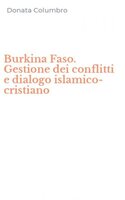
Il volume descrive le pratiche di dialogo e gestione dei conflitti nella regione saheliana del Burkina Faso, dove l'Union Fraternelle des Croyants, una ONG multi-confessionale, ha avviato una collaborazione proficua tra le comunità musulmane e cattoliche per promuovere lo sviluppo del territorio. E' delineato un quadro della variegata società burkinabè attraverso la sua storia, la sua composizione etnica e religiosa, un'analisi delle problematiche in atto e dei metodi di gestione del conflitto a disposizione dei cittadini. Il Burkina Faso può infatti rappresentare un esempio positivo di coabitazione pacifica tra etnie e religioni, nonostante le sue difficili condizioni climatiche ed economiche.
This paper looks at the effects of Islamization and colonialism on women in Hausaland. Beginning with the jihad and subsequent Islamic government of ‘dan Fodio, I examine the changes impacting Hausa women in and outside of the Caliphate he established. Women inside of the Caliphate were increasingly pushed out of public life and relegated to the domestic space. Islamic law was widely established, and large-scale slave production became key to the economy of the Caliphate. In contrast, Hausa women outside of the Caliphate were better able to maintain historical positions of authority in political and religious realms. As the French and British colonized Hausaland, the partition they made corresponded roughly with those Hausas inside and outside of the Caliphate. The British colonized the Caliphate through a system of indirect rule, which reinforced many of the Caliphate’s ways of governance. The British did, however, abolish slavery and impose a new legal system, both of which had significant effects on Hausa women in Nigeria. The French colonized the northern Hausa kingdoms, which had resisted the Caliphate’s rule. Through patriarchal French colonial policies, Hausa women in Niger found they could no longer exercise the political and religious authority that they historically had held. The literature on Hausa women in Niger is considerably less well developed than it is for Hausa women in Nigeria. This paper serves as an inquiry into the types of questions that need to be explored in future research on gender issues in Nigerien Hausaland.
Ce livre réunit pour la première fois la totalité des textes chantés au cours d'une cérémonie d'initiation ('girkaa') au culte de possession 'bòorii' des Hausa de la région de Maradi au Niger. La cérémonie dont traite le livre a eu lieu entre le 6 et le 14 novembre 1979 à Aderawa, petit village de 500 habitants, à 5 km au sud de Maradi. Chaque chant n'apparaît que dans une forme plus ou moins abstraite. Bien que chaque vers puisse être répété plusieurs fois, il ne figure dans ce livre qu'une seule fois. De même, seuls les vers chantés pas le 'mài gòogee' (soliste) sont reproduits; les autres joueurs se contentent dans la plupart des cas d'une répétition du texte proposé par le soliste. Les textes sont présentés en hausa avec une traduction française.
Nach einer kürzen Überblick über dan Staat (Teil I), folgt einer detaillierte Untersuchung der Provinz Gobir (Teil II und III). Der Verfasser beschäftigt sich dabei mit zwei Fragestellungen: wie verlaufen die Beziehungen zwischen staatlicher Verwaltung und Bauern? Wie wird den Bauern eine autonome Agrarkultur von einer islamisch-urbanen Kultur abgelöst? Bei der erste Frage konzentriert er seine Untersuchung auf die unterste Ebene, bei der Verwaltung und Bauern in unmittelbaren Kontakt zueinander treten. Die Herrschenden kommen dabei nur soweit ins Blickfeld, als sie auf den Bauern unmittelbar einwirken. Alle Angaben beziehen sich auf der Zeit vor dem Militärputsch (15.4.1947). Ebenfalls nicht berücksichtigt sind die heute weit wichtigeren Uran-Exporte. 6 Anhänge: Feldforschung - Hausa-Glossar - Preislieder - Das Budget von Bauernhaushalten - Das ökonomische System der Heiratsgeschenke - Die Kommerzialisierung des Bodens.
Hitherto studies of the Tuaregs have concentrated on the nomads of the north to the neglect of their southern brethren of Mali and Niger who have contributed most to the spread of Islamic culture and institutions. Their share in the foundation of towns like Timbuctoo, in the transmission of ideas particularly from Mamluk Egypt, their mystic lodges and their scholars played a key role in the penetration of Islam into the remote regions of the Southern Sahara. This is a comprehensive account of the history and spread of Islamic culture through the medium of the sacerdotal 'caste' of the Ineslemen, from the Arab conquests of the 7th century to the golden age of Tuareg scholarship in the 15th and 17th centuries. Tuareg history is brought up to date with an account of their resistance to the French and their present status in Niger after their severe sufferings in the recent Sahelian droughts. By detailed examination of the literary sources, talking and living with Tuareg scholars, the author is able to place the contribution of these devoted adherents of Islam in its true setting. This book is important for Islamists Africanists, Anthropologists and all those who wish to understand the achievements of this unique people.
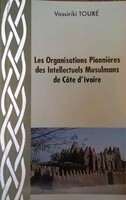
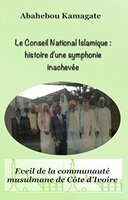
« Eveil de la communauté musulmane de Côte d'Ivoire », le récit d'une aventure communautaire est une œuvre de restitution de la naissance, du développement et de l'organisation de la communauté musulmane de Côte d'Ivoire.
L'avant-propos de l'auteur dégage déjà la quintessence du récit. Il dit : « Je voudrais à travers ces lignes, partager l'expérience de cette aventure et ma passion pour le travail communautaire dans lequel, par la grâce d'Allah Le Tout-Puissant, j'ai eu la chance d'être partie prenante pendant environ un quart de siècle ». Acteur et narrateur, il a su se placer à une distance à même de lui permettre de produire un texte au contenu éminemment objectif.
Si le récit a été axé sur la période charnière de 1985 à 1995, période qui a connu la gestion de la structuration de la communauté musulmane de Côte d'Ivoire, il a d'abord fait un rappel historique de la vie de cette communauté et de sa situation par rapport à l'administration coloniale. Son rôle dans la vie des nouvelles agglomérations et son poids socio-économique dans la naissance de la Côte d'Ivoire nouvelle ont été ainsi dégagés.
De la gestation de la Communauté Musulmane d'Aghien à l'émergence d'un écosystème ayant abouti à la création du CNI, cette œuvre donne dans des détails édifiants, avec forte argumentation et de nombreuses références sur toute l'évolution de chaque structure et les tractations ayant mené à leur naissance. CSI, COSIM, AJMCI, CERICI, AFMCI, etc., toutes les structures ont été passées au peigne fin. L'auteur a ensuite abordé la phase actuelle du développement de la communauté par l'interrogation « Quel visage présente les communautés musulmanes aujourd'hui ? » Cela lui a permis de faire un état des lieux des associations et ainsi d'en ressortir leurs forces et faiblesses.
En somme cette œuvre littéraire est une véritable publication scientifique historique sur la communauté musulmane de Côte d'Ivoire, de la période coloniale à nos jours. Elle est la restitution objective de faits historiques par un acteur qui a essayé, non seulement de faire un récit précis, mais d'en porter en plus une analyse objective. Ce livre suscitera à n'en point douter un intérêt certain pour les acteurs encore en vie, la relève actuelle et les historiens.
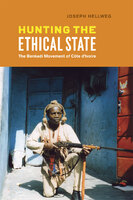
In the 1990s a nationwide crime wave overtook Côte d'Ivoire. The Ivoirian police failed to control the situation, so a group of poor, politically marginalized, and mostly Muslim men took on the role of the people's protectors as part of a movement they called Benkadi. These men were dozos—hunters skilled in ritual sacrifice—and they applied their hunting and occult expertise, along with the ethical principles implicit in both forms of knowledge, to the tracking and capturing of thieves. Meanwhile, as Benkadi emerged, so too did the ethnic, regional, and religious divisions that would culminate in Côte d'Ivoire's 2002–07 rebellion. Hunting the Ethical State reveals how dozos worked beyond these divisions to derive their new roles as enforcers of security from their ritual hunting ethos. Much as they used sorcery to shape-shift and outwit game, they now transformed into unofficial police, and their ritual networks became police bureaucracies. Though these Muslim and northern-descended men would later resist the state, Joseph Hellweg demonstrates how they briefly succeeded at making a place for themselves within it. Ultimately, Hellweg interprets Benkadi as a flawed but ingenious and thoroughly modern attempt by non-state actors to reform an African state.
Cet ouvrage est le résultat d'une enquête de terrain, méthodiquement et objectivement menée par l'auteur entre le Mali et la Côte d'Ivoire. Ses entretiens avec des spécialistes, des recrues au Mali et ses contacts avec l'administration sécuritaire des Etats ouest-africains, particulièment la Côte d'Ivoire, lui ont permis de faire un état des lieux de l'évolution et du profil du terrorisme en Afrique de l'Ouest.