Collection
Références (Niger)
- en
- fr
- Titre
- fr Références (Niger)
- en References (Niger)
- Description
- fr Livres, chapitres de livre, comptes rendus de livres, articles de revue, thèses, mémoires et rapports sur l'islam au Niger
- en Books, book chapters, book reviews, journal articles, theses, dissertations, and reports on Islam in Niger
- Couverture spatiale
-

Niger
- Identifiant
- iwac-collection-0000044

Contenus
-
Academic ArticleShari'a as De-Africanization: Evidence from HausalandTerrorist attacks on the United States on 11 September 2001 overlapped with ongoing movements of Islamic fundamentalism in sub-Saharan Africa; however, these movements have not been identical, nor have they encountered uniform responses from the governments overseeing them. This is evident in the Hausa borderlands of Niger and Nigeria, where I conducted fieldwork (first begun in the early 1980s) two months after the attacks. Differences in the application of shari'a (Islamic law) on both sides of the border accentuate differences in Hausa culture and society along national (i.e., Nigérien vs. Nigerian) lines. Traditional Hausa customs that have flourished for centuries (praise-singing, drumming, group dancing, and singing) are now proscribed in the northern Nigerian state of Katsina, where shari'a is tantamount to de-Africanization. In contrast, Zinder, a neighboring state in the Republic of Niger, has so far resisted a comparable Islamization of its legal code. Cultural differentiation across the Niger-Nigeria boundary persists along religious lines, despite the status of Islam as the common faith. This inflected globalization of Islam highlights the significance of national boundaries in delimiting the influence of religious revivalism. Other differences relating to Islamization are inferred from comparing the extent of pilgrimage to Mecca and the incidence of wife seclusion in neighboring Hausa villages on each side of the Niger-Nigeria boundary.
-
Academic Article
-
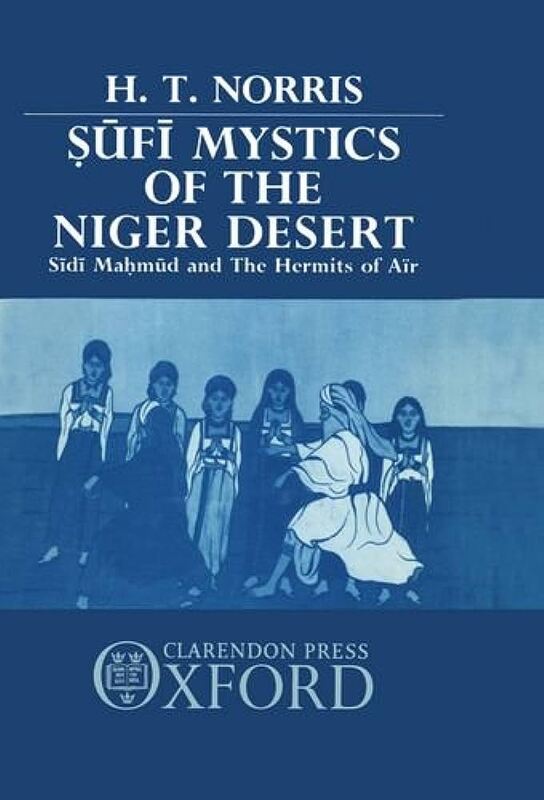
BookSufi Mystics of the Niger Desert: Sidi Mahmud and the Hermits of AïrThis book is a study of the evidence that exists to this day in the Niger Republic, and in the adjacent regions of Saharan and non-Saharan Africa, about the life of Sīdī Mahmūd al-Baghdādī, who, it is believed, introduced new doctrines of Oriental Sufism into the Aïr Massif during the sixteenth century. The teachings of Sīdī Mahmūd were to reappear recently in the Khalwatiyya Sūfī order (tariqa) in Niger. They are still important for contemporary Islam in that republic, which is a bridge between the Arab world and the Muslim states of the African Sahel. There is also evidence to suggest that initiated members of the Mahmūdiyya Sūfī order were once to be found throughout the entire Southern Sahara, from Timbuktu to Borneo and Lake Chad. This Sūfī order was one of the earliest to be founded in the area of Aïr which was a crossroads of African trade and of rival empires, and of conflicting tribes and peoples.
-
BookTelling Stories, Making Histories: Women, Words, and Islam in Nineteenth-Century Hausaland and the Sokoto CaliphateThrough reconstruction of oral testimony, folk stories and poetry, the true history of Hausa women and their reception of Islam's vision of Muslim in Western Africa have been uncovered. Mary Wren Bivins is the first author to locate and examine the oral texts of the 19th century Hausa women and challenge the written documentation of the Sokoto Caliphate. The personal narratives and folk stories reveal the importance of illiterate, non-elite women to the history of jihad and the assimilation of normative Islam in rural Hausaland. The captivating lives of the Hausa are captured, shedding light on their ordinary existence as wives, mothers, and providers for their family on the eve of European colonial conquest.
-
Academic ArticleThe "Protests against Charlie Hebdo" in Niger: A Background AnalysisIn many Muslim countries in West Africa and beyond, “protests against Charlie Hebdo” occurred when citizens went out on the streets following Friday prayers on 16 January 2015. However, only in Niger did these protests turn extremely violent. This report analyses the social, political and religious workings behind the protests in Niger. In doing so, it shows that the so-called “protests against Charlie Hebdo” are only superficially linked to the Muhammad cartoons by the French satirical magazine. Similarly violent protests have occurred in Niger – often in the town of Zinder – for quite different reasons and on different occasions in recent years. The report therefore argues against simplistic notions of religious fundamentalism and shows that the protests can be explained more appropriately in terms of politics and socio-economic exclusion.
-
Academic ArticleThe Association des Étudiants Musulmans du Niger (AEMN): Shaping Good Muslims, Producing a Muslim Elite. Islamic Activism in the Educational Landscape in NigerOver the past three decades, African students have created several religious associations that reconfigured the social and political landscapes of sub-Saharan universities. Scholars often focused on this type of religious activism and yet didn’t study the associations’ educational agenda comprehensively. This article intends to fill this gap by examining the socioreligious activities of the Association des Étudiants Musulmans du Niger (AEMN) and the impact of its educational discourse at the Université Abdou Moumouni (UAM) in Niamey, Niger. Mainly relying on empirical data gained through participant observation and interviews, it explores the ways the association pervades and shapes the educational landscape, notably by establishing partnerships beyond the university. The association’s leaders, so it appears, promote an educational ethos that redefines the role of academia and its benefits for the Nigerien society. Correlating students’ religiosity with academic performance, they try to reconcile Islamic values with scientific knowledge in the process of producing the future elites of the nation.
-
ThesisThe construction of Muslim identities and social change in Zinder, Republic of NigerSocial scientists have long debated the appropriate perspective from which to study cultural phenomena. On one side are objectivist perspectives which focus on structure and the constraints society places on the individual. Conversely, subjectivist approaches centralize the actions of the individual and are thus concerned with the influence the individual has on society. In this study of Muslim identity construction in Zinder, Niger is used as a vehicle for mediating objectivist and subjectivist views of culture. Practice theory provides the framework for the analysis of Muslim identity construction in Zinder which in turn furthers an understanding of the relationship between structure and practice. Based on data collected in Zinder during individual interviews, group interviews and participant observation, several conclusions emerge. First, a consideration of both objectivist and subjectivist perspectives is important for understanding cultural phenomena. Second, this is evident in the dialectical relationship which exists between structure and practice as seen in the dialectical relationship which exists between society and the individual. And finally, although both perspectives need to be considered, it is by focusing on the actions of individuals that one learns the most about culture.
-
ThesisThe Invention of Order: Republican Codes and Islam Law in NigerIn the last two decades of the twentieth century, crucial processes of political and economic liberalizations transformed the political landscape in much of the post-colonial world. The reigning theory of modernization which was pegged in the era of political emancipation to national development and authoritarian secular stratecraft came under the various challenges of human rights defending groups and the promoters of cultural nationalism. These groups boldly seek to rewrite the history and the future of political modernity, and in many countries, cultural nationalism took the form of an Islamist political project. Through historical and contemporary analysis of topical events and collective processes in Niger - a country ruled by a secular, democratizing state and consisting of a majoritarily Muslim citizenry - this dissertation seeks to uncover the depths and orientations of secularist and Islamist movements in a post-colonial context.
-
Academic ArticleThe moral and the political in African democratization: The code de la famille in Niger's troubled transitionThis article considers the political struggle surrounding the set of laws known as the code de la famille (family code) during Niger's 1992–93 transition to a democratic system as a means of examining the rise and decline of various social forces provoked by the transition, as well as for what it reveals about the difficulties that have plagued this new democracy. More importantly, the case provides an opportunity to examine the nature of the transformations subsumed under the rubric of ‘transition to democracy’ in Africa, or indeed elsewhere. The article argues that despite the universalist claims of the conception of ‘democracy’ dominant in international for a, the value system which it incorporates in fact frequently conflicts with prevailing indigenous values. Casting democracy as the search for a moral, rather than a political, order has thus complicated ‐ perhaps at times even doomed ‐ transitions to democracy.
-
BookThe Politics of Islam in the Sahel: Between Persuasion and Violence‘Ideologies need enemies to thrive, religion does not'. Using the Sahel as a source of five comparative case studies, this volume aims to engage in the painstaking task of disentangling Islam from the political ideologies that have issued from its theologies to fight for governmental power and the transformation of society. While these ideologies tap into sources of religious legitimacy, the author shows that they are fundamentally secular or temporal enterprises, defined by confrontation with other political ideologies–both progressive and liberal–within the arena of nation states. Their objectives are the same as these other ideologies, i.e., to harness political power for changing national societies, and they resort to various methods of persuasion, until they break down into violence. The two driving questions of the book are, whence come these ideologies, and why do they–sometimes–result in violence? Ideologies of Salafi radicalism are at work in the five countries of the Sahel region, Burkina Faso, Mali, Niger, (Northern) Nigeria and Senegal, but violence has broken out only in Mali and Northern Nigeria. Using a theoretical framework of ideological development and methods of historical analysis, Idrissa traces the emergence of Salafi radicalism in each of these countries as a spark ignited by the shock between concurrent processes of Islamization and colonization in the 1940s. However, while the spark eventually ignited a blaze in Mali and Nigeria, it has only led to milder political heat in Niger and Senegal and has had no burning effect at all in Burkina Faso. By meticulously examining the development of Salafi radicalism ideologies over time in connection with developments in national politics in each of the countries, Idrissa arrives at compelling conclusions about these divergent outcomes. Given the many similarities between the countries studied, these divergences show, in particular, that history, the behaviour of state leaders and national sociologies matter–against assumptions of ‘natural' contradictions between religion (Islam) and secularism or democracy. This volume offers a new perspective in discussions on ideology, which remains–as is shown here–the independent variable of many key contemporary political processes, either hidden in plain sight or disguised in a religious garb.
-
ChapterThe Public University of Niamey in the Era of Covid-19: Social Perception, Appropriation of Regulations and Management of Muslim WorshipLocated in the heart of Africa, Niger recorded its first case of Covid-19 contamination on 17 March 2020. To control the spread of the disease, the government took restrictive measures, including in universities. Based on a qualitative approach combining semi-structured interviews and observations (direct and indirect), this chapter examines the varying perceptions that students of the Université Abdou Moumouni de Niamey have of this pandemic as well as the control measures taken by political and academic authorities to deal with Covid-19. Debates around Covid-19 containment measures among students mirrored their socio-cultural realities, particularly their religious and scientific grounding.
-
Academic ArticleThe Scorpion's Sting: Youth, Marriage and the Struggle for Social Maturity in NigerThrough a focus on the problems associated with bridewealth and wedding expenses in Dogondoutchi, a predominantly Muslim town of some 38,000 Hausa speakers in rural Niger, I discuss the predicament of young Mawri men who, in the double pursuit of marriage and maturity, often struggle to satisfy contradictory sets of moral and financial requirements. I trace the distinctive and divergent ways in which Mawri men and women of different generations participate in interpenetrating debates about wealth, domesticity, and sexuality to highlight how the experience of social reproduction is shaped by distinctly local dynamics of gender and generation. In contemporary Niger, the combined effects of neo-liberal economics and reformist Islam have massively transformed the terms and meaning of marriage. What emerges most conspicuously from this exploration of the ways in which processes of identity formation are played out in the controversial arena of marriage is the palpable sense of declining opportunities that young men experience as they delay marriage.
-
BookThe Tuaregs: Their Islamic Legacy and its Diffusion in the SahelHitherto studies of the Tuaregs have concentrated on the nomads of the north to the neglect of their southern brethren of Mali and Niger who have contributed most to the spread of Islamic culture and institutions. Their share in the foundation of towns like Timbuctoo, in the transmission of ideas particularly from Mamluk Egypt, their mystic lodges and their scholars played a key role in the penetration of Islam into the remote regions of the Southern Sahara. This is a comprehensive account of the history and spread of Islamic culture through the medium of the sacerdotal 'caste' of the Ineslemen, from the Arab conquests of the 7th century to the golden age of Tuareg scholarship in the 15th and 17th centuries. Tuareg history is brought up to date with an account of their resistance to the French and their present status in Niger after their severe sufferings in the recent Sahelian droughts. By detailed examination of the literary sources, talking and living with Tuareg scholars, the author is able to place the contribution of these devoted adherents of Islam in its true setting. This book is important for Islamists Africanists, Anthropologists and all those who wish to understand the achievements of this unique people.
-
Academic ArticleThe Use of the Mobile Phone for Religious Mobilization in Niger RepublicWhile many scholars have studied the ways in which the Internet and online social networks are shaping contemporary religious practices and how new information and communication technologies are supporting networked forms of religious activism, only a few have analyzed the relationships between religion and the use of the mobile phone in African countries. However, in Africa as elsewhere, mobile phones are influencing the everyday practices of religion in multiple ways that are not simply anecdotal but affect beliefs and behaviors and raise ethical concerns among believers. In some cases (e.g., divorce, Qur’an verses, ringtones, prayer disruption), religious authorities have been obliged to draw up rules and provide guidance to the faithful. This article seeks to identify the opportunities offered and the challenges posed to religion by the introduction of mobile phones in Niamey, the capital-city of Niger Republic. It specifically examines how believers are using this device to mobilize co-religionists, to maintain religious ties and religious faith, as well as how they are coping with the challenges and seeking to resolve related issues. The article argues that the mobile phone is helping mediate in new ways and in a new context the religious norms and behaviors that have always guided Muslim communities. In other words, the advent of the mobile phone offers new opportunities but also poses new challenges to believers who strive to cope with this new phenomenon by inventing new ways to integrate the device into everyday practices. The article is based on semi-structured interviews carried out in June, July, and August 2009 in Niger’s capital city, Niamey, with ordinary Nigerien Muslims. It combines qualitative data obtained through interviews and observation with demographic statistics and survey results to describe the role the mobile phone plays in the current evolution of Islam in Niger.
-
Edited BookTransnational Islam: Circulation of Religious Ideas, Actors and Practices between Niger and NigeriaAt the crossroads of major trade routes and characterised by intense human circulations, the area that encompasses northern Nigeria and southern Niger is a privileged space to study transnational religious dynamics. Islam is, indeed, an essential feature of this region assuming today new forms in terms of discourses, practices, and modes of dissemination. In order to capture their changing complexity and diversity, regional Islamic dynamics need to be observed from both sides of the Niger-Nigeria border, where religious patterns echo each other but also obey different socio-political injunctions. While studying the processes of religious renewal and mutation, it is necessary to pay attention to the varied forms these processes take, to their direct and indirect effects and to the channels of transmission used. An interdisciplinary team of seven researchers from Niger, Nigeria, France and the United Kingdom was set up to conduct this transnational study; all authors carried out ethnographic fieldwork in both countries while constantly exchanging, comparing and discussing their respective findings with each other. Thus, this book provides first-hand material collected in the field, that contributes to enrich the reflexion on contemporary transformation dynamics in the Islamic landscapes of Niger and Nigeria, but also reflects the relevance of a transnational and comparative approach of these phenomena. Finally, it showcases the collaborative work of African and European scholars from Francophone and Anglophone countries - a type of scientific partnership unprecedented in this field.