Drawing on ethnographic field research conducted in the cities of Bouaké and Abidjan in Côte d’Ivoire between 2011 and 2017, this chapter examines the recent growth and institutionalization of Islamic voluntary, humanitarian and charity actions. The past two decades have been marked by the multiplication of formal and legally recognized Islamic NGOs in the country. The chapter focuses on the transformation of Islamic charity work and the emergent ethics of volunteerism that stems out of the institutionalization of Islamic charity. Contemporary Ivorian Islamic NGOs adhere to an ethic of volunteerism that builds on older-standing Islamic charitable principles based on personal zakât and sadaqqa donations. The emergent ethics of volunteerism emphasizes values of self-responsibilization, individual accountability and long-term development that converge with neoliberal development logics and prioritize private entrepreneurship while transferring responsibilities for humanitarian assistance to communities and individuals.
Cette chronique dresse un état des lieux des relations politico-religieuses en Côte d’Ivoire avant et après les élections présidentielles d’octobre 2020, en forme de bilan, après une décennie de régime Ouattara. Elle documente en premier lieu la relative perte d’influence des chefs religieux dans l’espace public, dominé plus manifestement que par le passé par les chefs politiques. Elle questionne en particulier le lien entre un mimétisme grandissant des autorités religieuses vis-à-vis du modus operandi des autorités politiques et l’érosion de leur crédibilité. L’article chronique ensuite la reprise d’initiative œcuménique de nombreux guides religieux qui ont formé, dans la dernière ligne droite des semaines précédant le scrutin, une « Alliance des religions en faveur de la paix » pour contribuer à l’apaisement d’un climat sociopolitique devenu houleux et violent. La conclusion interroge la critique latente du public des fidèles envers ses élites et son cheminement vers des initiatives possiblement émancipatrices mais très incertaines.
Religious communities in Côte d’Ivoire have received state operating FM radio frequency concessions. Thus appear in the Ivorian media space and especially in Abidjan, Radio Espoir and the Voix de l’Evangile of the Catholic Church, Radio Al Bayan of the Muslim Community of Côte d'Ivoire and Fréquence Vie of Protestant and evangelical churches. With varying opportunities, the three radios will evolve in two specific socio-political contexts. The first '90 to 2000 is marked by the quest for democracy. The second, from September 2002, is marked by a political and military crisis. These two periods also correspond to two generations of leaders and managers. In this situation of social crisis and widespread political, religious radios become spaces of collective expression and distribution channels appreciated by the population.
C'est en 1909 que Sahykh Sidi Mohammad Ben Abdallah, connu également sous le nom de Shaykh Lakhdar, introduisit la pratique de la prière à onze jawaharatu-l-kamali de la tijaniyya a nioro du sahel dans le Soudan français de l'époque. Cette branche particulière de la tijaniyya se rattache au nom de Shaykh Hamahoullah ou Hamallah, disciple puis successeur de Shaykh Lakhdar. L'apparition de la hamawiyya ou hamallisme correspond, sur le plan politique à la mise en place des instruments de la colonisation après les conquêtes et sur le plan religieux à la fin des jiahd-s et à l'acceptation du fait colonial par de nombreux chefs de familles maraboutiques et confrériques. Le refus du compromis colonial de Shaykh Hamahoullah et l'excès de zèle des hamawi vont placer la tijaniyya hamawiyy dans une position de confrontation avec l'administration française de 1925 à 1948. A la faveur d'une bataille rangée entre plusieurs tribus maures des cercles de nioro et de l'assaba en août 1940, l'administration lança une vaste répression contre la hamawiyya. Elle aboutit à la dispersion des principaux leaders de la hamawiyya dans plusieurs centres d'internement africains et à la mort, le janvier 1943 en déportation de Hamahoullah. La décolonisation et l'émergence des partis politiques dans la seconde moitié des années '40 offrent l'occasion aux hamawi de développer de nouvelles perspectives de redéploiement en particulier en milieu urbain. Dans les états postcoloniaux, l'attitude des partisans de la tijaniyya hamawiyya se partage entre le rapprochement avec la umma nationale et une position rigoriste qui lui donnerait les contours d'une secte intégriste.
The walking of Ivory Coast between 1990 and 2010 is marked by crises with political character and religious. The country crossed two black decades when the religious membership and the cultural origin were at the heart of the political fact. The political leaders instrumented and exploited the ethnico-religious fiber in the optics to quench their ambitions. Their religious politics centred on the exploitation of the religious feelings will consist in establishing ambivalent relations with the religion. If president Bédié, in spite of its politics of ivoirité source of frustration and social division, led several operations of seduction towards the Muslims in particular, Laurent Gbagbo, as for him, will make the promotion of the Pentecostalism which he will invite in the political arena by making of men of God, ministers and prophets of the influential members of his seraglio. Following the example of his predecessors, he will not however neglect, to make benefit in the Muslim community his "generosity".
This study examines the origins and development of the community of Hamawi Sufis that formed around Yacouba Sylla in French West Africa beginning in 1929. Based on research in the French, Senegalese, Malian, Ivoirien and Mauritanian archives, as well as on an analysis of the oral traditions of the “Yacoubist” community itself, the study uses the group's past to shed light on several aspects of the history of French West Africa. It argues that Yacouba Sylla and his followers played important roles in the evolution of French Muslim policy in the 1930s, in the transformation of the economy of Côte d'Ivoire in the 1940s, and in the struggles over self-governance and independence in French West Africa in the 1950s. Many of Yacouba's early followers were former slaves and casted persons, and the dissertation raises questions about the cultural and social meanings of emancipation by interrogating common assumptions about the processes by which slavery came to an end in West Africa. In particular, it explores the social meanings and uses of memories of dependency among former slaves and casted persons, as well as among former masters, “freeborn” nobles and colonial analysts. The study fuses social and intellectual history, devoting equal attention to the ideational and spiritual aspects of the Yacoubists' religious beliefs, to the social and cultural contexts that made those beliefs meaningful, and to the questions of power that surrounded their representation. Finally, it highlights an underappreciated methodological point about the sources of African history. The practices of knowledge production in the colonial administration were such that African informants and political elites actively manipulated the creation of the “colonial library” in their efforts to appropriate the power of the state. Seen in this light, colonial archives reveal themselves to be largely “African” sources that can be read according to methodologies analogous to the analysis of oral traditions.
Depuis le milieu du XXème siècle, l'Islam est en pleine transformation en Côte d'Ivoire sous l'impulsion d'intellectuels formés non plus suivant le modèle traditionnel des marabouts (karamogo), mais conformément aux normes éducatives des prestigieuses universités du monde· arabe-musulman. Ils se caractérisent par un savoir qui s'énonce essentiellement en arabe. Cette élite . ivoirienne agit dans un domaine purement religieux où elle appelle au retour d'une pratique islamique purifiée, débarrassée des coutumes et des . innovations, mais conforme aux sources originelles de l'Islam (le Coran et la Sunna). Cela, indépendamment de la maîtrise de la langue utilisée pour exprimer ces idées. L'apparition de ces intellectuels musulmans arabophones, nantis d'idées novatrices, apporte de profonds bouleversements dans le développement de l'islam en Côte d'Ivoire. Dans ce pays, l'islam amorce ainsi un nouveau tournant. Les manifestations les plus significatives de ce "réveil" résident dans la plus grande visibilité de l'Islam, le développement communautaire et organisationnel de l'Islam en Côte d'Ivoire: le Conseil Supérieur des Imams (COSIM) et le Conseil National Islamique (CNI) représentent des interlocuteurs privilégiés de la communauté musulmane auprès de l'Etat et auprès des institutions internationales islamiques.
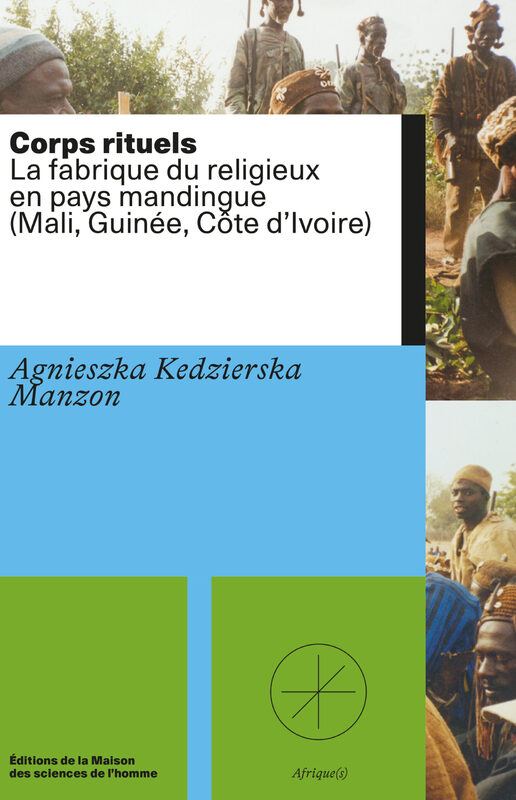
Entre un passé compliqué et un futur incertain, comment vivre au mieux avec soi-même ? Pour répondre à cette question, l’ouvrage explore les constructions de soi de trois types de spécialistes rituels mandingues : les donsow (les chasseurs), les basitigiw (les féticheurs) et les jinatigiw (les maîtresses des génies). Il analyse la relation entre ces spécialistes et les entités – êtres de la brousse, choses-dieux et génies urbains – que leur pratique fait émerger. Il vise à saisir, par ce biais, ce que fait le rituel, comment il le fait, et ainsi à améliorer notre compréhension de ce mode d’engagement particulier. Afin d’en appréhender le rôle dans la fabrique du religieux, le regard est porté sur la dimension matérielle de cette fabrique : ingrédients des sacrifices, couleurs des habits qui plaisent aux génies, tonalité baroque prisée par les « nouveaux entrepreneurs religieux » qui excellent dans l’usage du « faux authentique », et, surtout, sur le corps des experts, qu’ils soient à la chasse, en transe, ou engagés dans un chair à chair avec certains objets-sujets ou avec des « personnes qui ne sont pas des personnes ». Le déplacement des conditions d’intentionnalité ou d’agentivité que ces spécialistes opèrent à travers leurs pratiques leur permet-il de modifier durablement leur rapport au monde, de se constituer en des sujets « virtuoses », d’agrandir leurs marges de liberté ? Ces pratiques, qui contribuent à l’émergence de la sphère a-islamique, se constituant dès les années 1990 face aux pratiques associées à l’islam, modifient-elles les rapports de force et de genre en place dans les sociétés africaines de ce début du xxie siècle ?
L'article étudie l'évolution des formes de l'islam d'expression française en Côte d'Ivoire depuis leur émergence dans les années 1970, et leur expansion sur les quinze dernières années. Il pose l'hypothèse heuristique d'un islam francophone à double entente, dans la mesure où il apparaît à la fois tangible par sa visibilité croissante notamment dans l'espace public et simultanément restreint par certaines contraintes qui en limitent l'usage dans divers contextes locaux, intimes et écrits. Pour cerner ces ambivalences, l'approche méthodologique privilégie les questionnements sur les analyses catégoriques et une démarche éclatée plutôt que synthétique. Pour enrichir et nuancer les propos, elle confronte aussi le regard d'un militant et intellectuel musulman ivoirien et celui d'une chercheuse en sciences sociales.
During the French colonial administration of Cote d’Ivoire, two educational systems coexisted: the western type of education and the Quranic schools. Based and organized around the Koran, the later was devoted to the promotion Islam and the spread of Islamic civilization. Introduced in Cote d’Ivoire from the northern region before the fifteenth (XVth) century, Islam spreads all over the colony through trade carried out by the Mande and Dioula networks (formed of traders, marabouts, etc.) under French colonial administration control. This study takes into consideration the Islamic education in a context of close religious control by French colonial administration in Cote d’Ivoire. Through a diachronic analysis, this paper intends to dynamically study the relationship between Islamic education and the French colonial administration in Cote d’Ivoire by highlighting the the French Muslim policy in its implementation in a broad context of social religious order in western Africa.
This chapter evaluates how measures of confinement imposed by the government and adapted by Muslim communities generated new forms of Islamic socialisation and the organisation of worship (sermons, sessions of tafsir, etc.) on the web, in a religious context characterised by competing ideological currents. In fact, Covid-19 has created an unprecedented health crisis in Côte d’Ivoire. Like most countries affected by this pandemic, the Ivorian authorities have implemented response strategies ranging from the establishment of a night curfew, the exhortation to stay at home and the isolation of the city of Abidjan, pandemic epicentre which registered more than half of the 1000 patients at the end of April 2020. Muslim community organisations reacted to these preventative measures by deciding to close mosques and by taking other measures aimed at restricting religious activities. In this context of social distancing promoted by confinement, the digital media have proven to be a considerable contribution towards ensuring the continuity of Islamic activities and the maintenance of social ties. Facebook, an online meeting platform with more than 3 million subscribers in this West African country in 2017, served as a channel for restoring community life. On this social network where religious leaders, young influencers and Muslim media (radio and newspaper) have accounts followed by thousands of subscribers, messages and videos that are usually oriented towards da’wa (Arabic term for “call to Islam” Arabic) now include information and attempts to sensitise Muslims to measures to control the spread of Covid-19.
Cet article revient sur les événements issus du second tour des élections présidentielles du 28 novembre 2010, lesquels ont replongé la Côte d'Ivoire dans le spectre de la guerre civile. Le texte est à la fois un engagement dans la dénonciation des exactions commises par les forces loyales au président sortant Laurent Gbagbo et un essai d'analyse des mécanismes des violences en cours.
Cette étude retrace à grands traits les trajectoires locales des mouvements réformistes ivoiriens, ghanéens et béninois, leurs ouvertures à l’international et leurs éventuelles convergences, dans le contexte des grandes villes côtières que sont Abidjan, Accra, Cotonou et Porto Novo. Il s’agit de poser quelques jalons pour une histoire des mouvements islamiques sur la côte de Guinée en s’attachant de manière privilégiée à la mouvance islamique dite « réformiste », appellation générique faisant ici référence aux individus, associations, écoles, activités ou médias musulmans non identifiés par une allégeance soufie. Ce terme, que les intéressés n’utilisent jamais, permet néanmoins d’identifier une « communauté de savoir » dont l’importance relative et la visibilité surtout urbaine, n’ont cessé de s’accentuer sur la scène islamique depuis les années 1970 et plus encore 1990. Mais les mouvements réformistes sur la côte de Guinée restent foncièrement pluriels et singulièrement autonomes.
In this article, we tackle the relationship between youth and reform in Islam. We propose here to examine the various ways in which young Muslims shape their references to Islam in Côte-d'Ivoire since the 1990s. While the religious activism of young Muslims in the 1990s is relatively well documented, the relationship to Islam by young men and women coming out of the post-2002 military and political crisis is much less known. In fact, as of the 1990s, two figures and two ways of being a young Muslim in Côte-d'Ivoire emerge : the activist that prevails in the 1990s and the « entrepreneur » that gained grounds in the first decade of the 21st century. Even if our analysis fits in the diachronic frame of these two figures, it will relate specifically to the experience, the ways of being Muslim and the religious imaginary of young Muslims ensuing from the post-2002 military and political crisis. We intend to circumscribe the main component of the moralization logic put forth by these young men and women. The discussion stems out of an ethnographic study conducted in 2008 in the cities of Bouaké and Abidjan, with an emphasis on the life trajectories of young Muslim men and women.